
Introduction
Refinishing furniture has become one of the most rewarding home projects today. Whether you’re restoring an old family dresser, updating a thrifted table, or breathing new life into a set of wooden chairs, sanding is the most critical step in the entire process. A smooth, clean surface determines how well paint adheres, how evenly stains absorb, and how professional the finished piece looks. Because sanding plays such an essential role, choosing the best sander for furniture is a decision that can dramatically affect the results of your project.
With today’s technology and wide range of tools available, there isn’t a one-size-fits-all solution. Different types of sanders offer different advantages, and the right choice depends on your furniture’s shape, condition, wood type, and finish goals. This comprehensive guide breaks down the best sander for sanding furniture, what features matter most, and how each tool fits into the furniture refinishing process. Whether you’re a beginner or a seasoned DIY enthusiast, this article will help you choose tools confidently and understand how to use them effectively.
Why the Right Sander Matters in Furniture Refinishing
The Foundation of a Beautiful Finish
Every successful refinishing project begins with removing old finishes and smoothing the wood surface. Paint and varnish can cling stubbornly, and scratches or dents in the wood can show through even the best stain or paint finish. The right sander provides consistent pressure, reduces the time needed for prep work, and ensures a quality outcome.
What Happens When You Choose the Wrong Sander?
Using the wrong tool can lead to:
- Uneven surfaces
- Visible swirl marks
- Damaged veneer
- Weak paint adhesion
- Inconsistent staining
Investing in the best sander for furniture refinishing saves time, prevents frustration, and preserves the integrity of the wood.
Types of Sanders and Their Role in Furniture Projects
Different sanders serve different purposes. Some are ideal for large surfaces, while others are designed for curves, corners, or tight areas. Below are the most common types used for furniture restoration.
Orbital Sanders
Orbital sanders are one of the most versatile tools for furniture projects. They move in a small circular pattern, allowing smooth and controlled sanding. These sanders are excellent for beginners because they are gentle on wood but still powerful enough for prep work.
Best Use Cases
- Light stripping of old finish
- Preparing the surface before painting
- Smoothing between coats
Orbital sanders leave fewer visible swirl marks compared to more aggressive sanders, making them a top choice for detailed refinishing.
Random Orbital Sanders
The random orbital sander is often considered the best sander for sanding furniture because it combines circular motion with random movement. This significantly reduces the risk of leaving patterns on the wood.
Advantages
- Excellent for removing stain or varnish
- Suitable for both rough sanding and fine finishing
- Works well on flat surfaces and slight curves
If you plan to refinish multiple pieces or want a professional-grade finish, this is one of the most reliable choices.
Detail Sanders
Detail sanders are small, pointed-tip tools that reach into corners, carvings, and tight spots where larger sanders cannot fit. While they are not strong enough for heavy material removal, they are essential for refined work.
Perfect For:
- Chair legs
- Table corners
- Decorative trim
- Intricate carved furniture
Combining a detail sander with a more powerful primary sander ensures you can refinish every part of your piece efficiently.
Belt Sanders
Belt sanders are powerful tools designed to remove material quickly. Because they are aggressive, they require experience to use safely, especially on delicate furniture.
Recommended For:
- Removing thick layers of old paint
- Smoothing extremely rough surfaces
- Working on large, solid wood pieces
These sanders are not typically recommended for beginners or for delicate veneer.
Palm Sanders
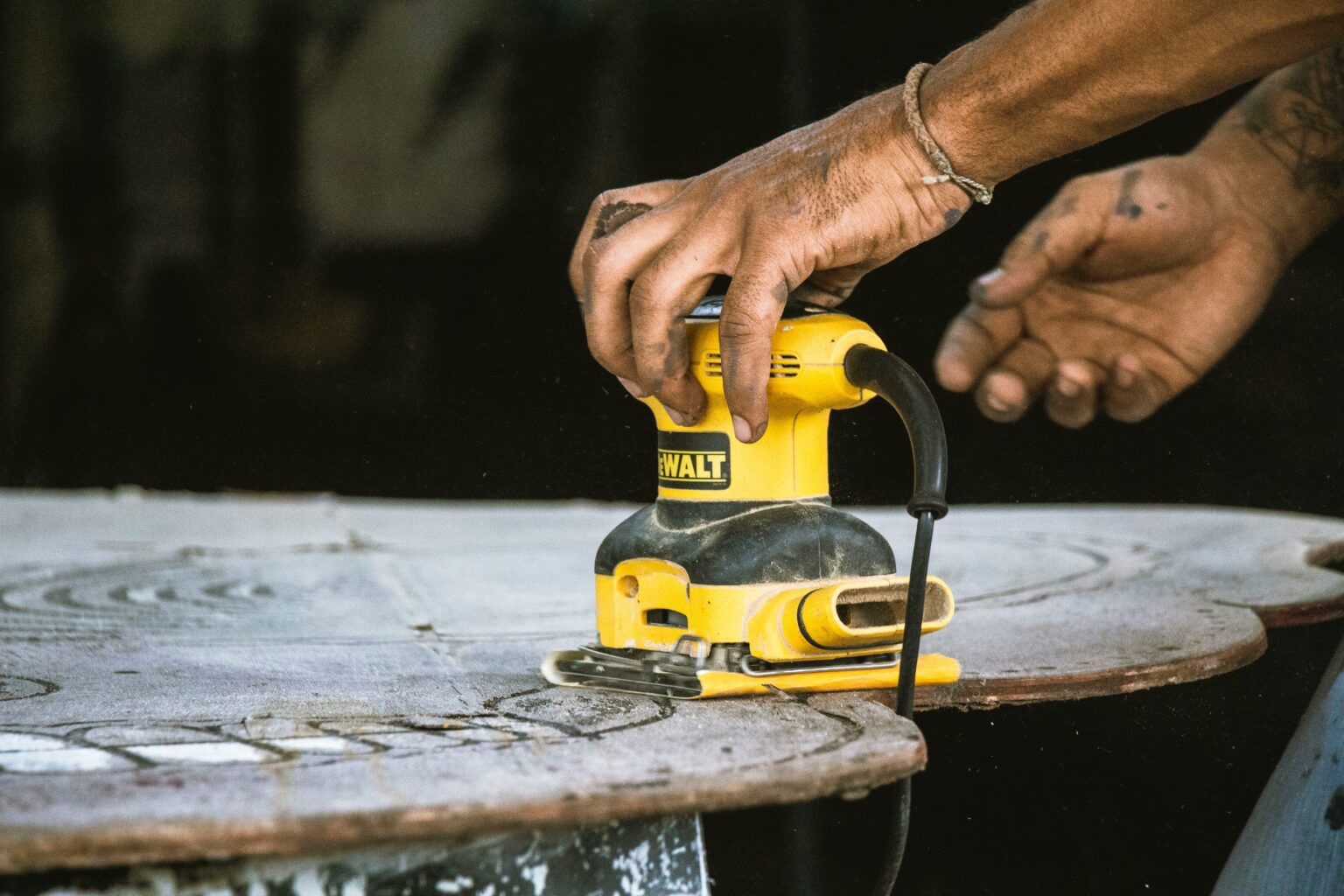
Palm sanders are lightweight, easy-to-control tools that fit comfortably in one hand. They are great for smaller surfaces or light refinishing.
Best For:
- Quick prep sanding
- Touch-ups
- Smoothing small furniture items
They don’t remove as much material as belt or random orbital sanders, but they are ideal for fine finishing work.
Choosing the Best Sander for Furniture: What to Consider
Selecting the best sander for furniture refinishing depends on several factors. Here are the key elements to evaluate before purchasing.
1. Power and Speed
Stronger tools complete sanding faster but can also cause damage if not handled properly. Variable speed settings allow the user to adjust the intensity depending on whether the task requires aggressive stripping or delicate finishing.
2. Dust Collection System
Dust is unavoidable, but the right sander can help minimize mess. A good dust collection system protects both air quality and work quality. Excess dust can settle back onto the wood and interfere with staining or painting.
Look for:
- Built-in dust bags
- Ports that connect to shop vacuums
- Micro-filtration systems
Cleaner workspace equals cleaner results.
3. Comfort and Ergonomics
Furniture refinishing often requires extended sanding sessions. A sander that’s too heavy or poorly balanced can cause strain and make it difficult to achieve smooth results. Look for a comfortable grip, balanced weight, and low vibration.
4. Sandpaper Availability
Different sanders use different pad shapes and attachment systems. Choosing a tool that uses easily accessible sandpaper ensures you won’t face frustration while trying to complete your project.
5. Type of Furniture
The size, design, and age of the piece being refinished heavily influence the ideal tool.
For example:
- A large dining table may require a random orbital or belt sander.
- A small antique nightstand with delicate details may need a gentle orbital or detail sander.
- Chairs with round legs may require a combination approach.
Understanding your furniture helps guide your tool selection.
The Best Sander for Furniture: Ideal Choices for Different Projects
Because no single sander is perfect for every situation, here is an in-depth breakdown of which tool works best depending on the task.
Best for Large Flat Surfaces
A random orbital sander is perfect for tabletops, dresser tops, cabinet doors, and large wooden panels. It removes old finish quickly while offering a smooth, swirl-free surface.
Best for All-Purpose Refinishing
Orbital sanders and palm sanders are versatile enough for most household furniture projects. They balance power with control, making them ideal for both beginners and experienced DIYers.
Best for Antique or Delicate Pieces
Antique furniture often has:
- Veneer
- Thin wood layers
- Decorative carvings
Using a powerful sander can cause irreversible damage. For delicate restoration, a gentle orbital sander combined with a detail sander offers the safest and most effective approach.
Best for Heavy Stripping
For removing several layers of paint or varnish from thick, solid wood furniture, a belt sander is the fastest option. However, it requires controlled movements to avoid gouging the surface.
Step-by-Step Guide for Using a Sander on Furniture
1. Prepare the Area
Cover floors, remove hardware, and ensure good ventilation. Dust will spread, so preparation is key.
2. Begin with Coarse Grit
Start with 60–80 grit sandpaper to remove old finish or heavy scratches. Keep the sander moving to prevent gouges.
3. Move to Medium Grit
Switch to 120–150 grit to smooth the surface after removal.
4. Finish with Fine Grit
Use 220–320 grit for a silky, paint-ready or stain-ready surface.
5. Clean Thoroughly
Vacuum dust, wipe with a tack cloth, and inspect the surface before applying stain or paint.
Safety Tips for Sanding Furniture
- Wear eye protection
- Use a dust mask or respirator
- Secure loose clothing
- Sand with the grain
- Keep hands clear of moving parts
Safety ensures both healthy working conditions and high-quality results.
When a Sander Isn’t Enough
Certain refinishing tasks, such as heavy paint removal, may require additional tools like chemical strippers or heat guns. In these cases, sanding becomes the second step after stripping.
Conclusion
Choosing the best sander for furniture refinishing can transform your project from time-consuming and frustrating to efficient and enjoyable. With the right tool—whether an orbital sander for smooth finishing, a random orbital sander for powerful versatility, or a detail sander for the tightest corners—you can achieve professional results at home.
Understanding the strengths of each sander helps you match the tool to the piece of furniture and the stage of the refinishing process. By investing in quality equipment and taking the time to sand properly, you will unlock the true beauty of your furniture and create stunning pieces that last for years.